Welcome!

This blog is here for you to find fun learning activities to do with your children. We share great ideas we find and love on the Internet, as well as ideas we come up with on our own! We also like to share resources we find helpful.

To find ideas for your child, click on the age range blog label or on the theme/topic you are looking for (on the left side of the page). In each post, we try to list optimal age ranges for the activity, but you must judge for yourself if it is appropriate for your child. When you try an activity out, please comment and let us (and everyone else) know how your child liked it!
Showing posts with label reading. Show all posts

Monday, April 16, 2012

Sticky Vowels


Vowels are the letters that hold words together. This is a fun craft to help solidify that idea in your child's mind.

First, find a glue clipart picture you like online (or draw your own).

Second, copy the picture and paste it into your word processing program. 

Third, resize it to the size you like and then copy it and paste it four more times.

Fourth, print this sheet out.

Fifth, you will want letters. You can write them, get stickers or die-cuts, etc. You could even put them on your glue bottles in your word processing program before you print.

For the activity, have your child color the glue bottles, cut them out, and stick the words on the glue bottles. Talk about the role vowels play in our words. Not only will you be increasing your child's understanding of letters in preparation for reading, but also practicing cutting, coloring, and pasting if gluing letters on the bottles. 

Wednesday, April 11, 2012

Simple Reading


Kaitlyn came home with these very cute ideas on helping children learn to read simple words in similar word families. In the picture above, you can see the teacher took a paint chip sample, cut out a hole, then printed out a strip of letters that can go along with the two letters to make various words (c-ap, g-ap, l-ap, m-ap, r-ap, s-ap, t-ap, z-ap). The child then moves the paint chip sample and reads the word that goes with the first letter. 


In this example, you see a fun way of incorporating a theme into your word practice. They were learning about the letter P and also farm animals. 


Monday, January 16, 2012

Surviving Winter: Story Time at the Library

image source
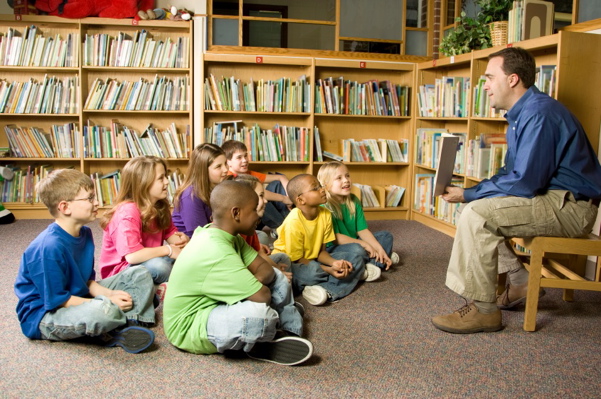
I think a huge secret to making it through the winter months and still being sane, happy, and even a bit improved is to get a change of scenery every so often. One way to do this is story time at your local library. How awesome is the local library? All that free stuff? 

Every library does story time differently. For some, it is a "come one, come all" thing where you just show up and get some stories read. My library requires you sign up ahead of time, but they do really neat things for the children with fun crafts, handouts, and treats. 

And not all storytimes are at the library. We have a non-profit center close to our home that focuses on the history of the American West. They do a free storytime weekly that is full of stories, games, crafts, and food, and it is come one, come all, no sign ups required. Learn about the resources you have around you by asking moms with older children, reading the papers, and checking websites. 

Storytime offers a love of reading along with a social outing that is low-pressure. This is a great winter, rainy day, or hot day activity!

Wednesday, January 11, 2012

Surviving Winter: Extra Book Reading


Part of combatting winter crazies is keeping the mind engaged. When you are stuck inside for longer hours than usual, reading extra books is a fun way to pass the time and engage the mind. Try adding an extra story session to your day at some point--maybe after breakfast or lunch or just before nap time. Chase the winter blues away with a pile of books.

Friday, August 5, 2011

Word Families


So, your child knows all of his/her letters and the sounds they make. Now what? Now it's time to make some words!

For some words, for example said, the, is and love, you might want to try learning those as "sight words." In other words, helping them learn the word just by looking at it, rather than using rules/clues/phonics to figure it out.

Then there are those words that they can "sound out": take each letter, make the sound, blend together. That's one approach.

I like to mix it---take what they know, add some "rules" and help them take the word by chunks, rather than sound by sound.

A great use for a baking sheet and those magnetic letters (that you hopefully have organized now, right?) is making those chunks, or word families.

I usually start with the -at family/chunk. Take -at. Sound it out. Read it, read it, read it. Use your finger to scan left to right. Have them say it with you. Then talk about rhyming words. Remind them to make real words, as little ones like to make rhyming words like dat, yat, and wat. Arrange your letters like the above picture. Make each sound together with the letters on the bottom. Here's how our conversation would go:

Me: What are these two letters at the top here (pointing to -a, -t)?

Her: A and T.

Me: What sound does this make (pointing to a)?

Her: (short a sound)

Me: How about this one?

Her: /t/

me: Good! Now let's put that together. (Scanning with my finger from left to right). Say it with me. "aaa-ttt"

Her: -at (in unison)

Me: Good. Let's do that again. (repeat) What's this letter? (Pointing to 'c')

Her: C.

Me: What sound does that make?

Her: /k/

Me: Good. What happens when I put this at the front of our -at chunk? Can you blend that together?

Her: /k/-at.

Me: Again, a little fast this time.

Her: /k/-at. /k/ at. Cat!

Me: Great! Let's try this letter (and repeat for each letter).


Once you've done that, try mixing it up. You put a letter at the beginning, and with less help this time, let them problem solve. Remember, the idea is to recognize -at as a chunk, not as individual sounds. So it should be: c -at, not c-a-t.

Then you can have them make their own -at words, manipulating the letters themselves.

For a challenge, you can add blends to the beginning, like fl-, th-, br-, etc.


The next step could be to print/make pictures of a cat, bat, hat, mat, rat (etc) and write the word on a card, having them match the card with the words.


Tuesday, July 12, 2011

Face-Out Bookshelves--Part Two

So yesterday Valerie posted about her face-out bookshelves, inspired by Jim Trelease's The Read-Aloud Handbook. Having also read Jim Trelease's book after Valerie raved about it for so long, I was enamored of the face-out bookshelves too! After some quick googling for images similar to what was posted yesterday I was practically drooling :)

This obviously called for a trip to Ikea. I found the perfect solution for us since my husband has little time for building shelves and our budget is rather tight. These picture ledges from Ikea are the perfect size for displaying books. We got two long ones and two short ones. Honestly I much prefer the long ones, but the short ones can be useful in a tight space and you can go vertical with them. I also like that they come in black or light wood tone so if white isn't your style you can make them fit into your home's decor.

(this is our playroom, note the shelves above the toy bins)

(I recently changed out some of the lower shelf books)
(this is the other side of the playroom, with 2 small Ikea shelves within reach of our glider rocker)
(see, perfect for cozying up with a book during roomtime)

Jim Trelease claims that books that are more visible will be used more, and I can say that those books on the lower two shelves get read ALL THE TIME now. In fact I confessed to my husband the other day that I am tired of reading aloud to Tobias and wish I hadn't put the shelves up, lol! (I'm only joking, I'm happy he's loving his books).

Now I'm using those lower shelves to display books according to our theme. Right now we have books on Family on the small shelf, come September I'm sure it'll be full of books about pumpkins and trees and fall.

Monday, July 11, 2011

Face Out Book-Shelves


Oh how I love the concept of face-out bookshelves! The idea is simple. Think about a book store. How do they face the books they want to promote and sell? Are they spine in, or cover out? Cover out right? Seeing the cover of a book increases visibility, which increases how often it gets read (or purchased in a book store).

Jim Trelease suggests you find a place to do face out bookshelves in your home for your children in The Read Aloud Handbook. (See his website here for full info and pictures: http://www.trelease-on-reading.com/rah-ch7-pg3.html#raingutters). 

Ever since reading about this brilliant idea over a year ago, I have wanted it in my house. For this past Mother's Day, my wish came true! My husband designed and built these shelves for me. This picture was taken shortly after the completion, so obviously things were not all in place yet...and they are not today, either. 

The very top shelf is for pictures and whatever....I haven't nailed that one down yet.

The empty shelf in the picture is my "picture shelf." This is where I am putting photos of my children reading. I got a picture taken of the three of them reading and had it put on a canvas. The other photos will be printed normally so I can easily and inexpensively change them as I want to.

The uppermost row of books you can see is the shelf for chapter books and books my husband and I are reading. I am always reading several books at a time, and this seriously makes it so much easier for me to keep straight what I am reading and what I should be reading. 

The next shelf down I use as a shelf for books we have checked out from the library that I will be returning on our next visit. This encourages the children to read the book and also warns them if a favorite book is about to return.

The bottom two shelves are for books that fit the theme of the current week for learning activities and the next week of learning activities.


These shelves are so very worth it. I love having them. My children love them. They look at the books all the time. This Wednesday, I will have a full tutorial for you with instructions for how to build these exact shelves.

But this is not the only way to do these shelves. We talked about this in a reading book club I am in and here are ideas found on the web by ladies in that group. You can see there are many amazing ways to do these shelves!

Hanging Book Sleeves--easy to make

Flat Wall Book Holders--great for small spaces. Make yourself.


This is from IKEA. You apparently can't see the entire book, but it is an option for  you.

10 Dollar Ledges--make yourself

Raingutters are a very inexpensive and easy way to go.

Another inexpensive option is the spice racks here!

So there you have some ideas! Manda will share what she has done tomorrow, and I will share our tutorial for the ones we made. The neat thing about ours is that you can't see the hardware--how we hung it. No screws--it looks free floating. I love that. 


Friday, May 20, 2011

Summer Reading Programs

Image Source

This is my first summer as a mom of a child who has been in school. I have been thinking about ways to prevent "summer setback"--and yes, I wrote a post on it last summer: http://learningdevelopmentactivities.blogspot.com/2010/08/preventing-or-minimizing-summer-setback.html

It has great ideas. I am working on coming up with a specific plan so we don't slide into complacency and accepting the "summer slide." Or so August 1 doesn't roll around and I think "ack! Summer setback!"

One of the most successful things you can do to prevent summer setback is reading. We read a whole lot at our house. Even so, I wanted to do something motivating for reading in the summer. Goals help people perform to their best ability, so I thought a summer reading program would be fun.

Our library has a free summer reading program available for people of all ages. The goal is simple: 20 minutes a day. But prizes are awarded for most minutes read.

They also have some fun craft projects, a magician, and they have rented out the local pool for a swim party for those who complete the program! Lots of fun.

So check your local library and see if they provide some sort of reading program. If not, you can create your own with goals and a fun prize at the end--maybe a trip for ice cream, a fun outing, or a new book!

Monday, November 8, 2010

Reading Sight Words


Sight words are words you have to read by sight. You cannot sound these words out. As your child becomes more familiar with sight words, he will be able to 

So just how do you teach your child to read sight words?

First, start by reading to your child regularly--daily for at least 20 minutes. Do this no matter the age of your child (that means from young to old). 

Second, run your finger along the words as you read. As your child starts to become interested in reading, he/she will follow along and might just start to pick up on some commonly read words.

But you can't simply read. It does take more.

A common approach is flash cards or word lists. This is one method that has its place. Above, you can see the sight-word flash cards I made for Brayden. They are simply notecards with the words written on the back.

My favorite approach is the Bob Books Sight Words books. These are new. I did a review on these books on one of my other blogs. The great thing about these books is that the child is reading the words in context, and reading the new sight word over and over again. This means the child really gets to know that sight word well by the end of the book. It is read capitalized, lowercase, at the beginning of sentences, in the middle of sentences, at the end of sentences....it is more than memorizing a list. It is learning a word in the purpose it was intended--to read it. Bob Books sight words do include some words that can be sounded out. The Bob Books Sight Words set also comes with pre-made flash cards for extra practice. These flash cards have the word on one side and a sentence with the sight word in it along with a picture on the other side.

So there you have a few simple ways to teach sight words. Need help knowing what sight words are? Here are some lists:

Saxons Phonics Sight Words for Kindergarteners (15)
  • My
  • You
  • Into
  • From
  • One
  • Said
  • Have
  • Four
  • Love
  • What
  • The
  • To
  • Of
  • Do
  • Was

Bob Books Sight Words for Kindergarteners (30)

  • Ran
  • Saw
  • To
  • Can
  • Jump
  • On
  • A
  • Fly
  • Has
  • Is
  • Look
  • Who
  • As
  • Had 
  • Was
  • In 
  • Not
  • Some
  • Did
  • Do 
  • She
  • Get 
  • Go
  • Off
  • Over
  • They
  • Went
  • Goes
  • Down
  • Home

Monday, November 1, 2010

Successful Learning Tip: Read To Your Child


Can I push reading any more? I probably could :).

A very important tip for successful learning is to read to your child. Reading is so important because all learning requires reading. Every subject involves reading. I have gone over more in this in this post. I wanted to make sure that as you look over ideas for making learning time successful, reading came on your radar.

Not only do you want to read, but you want to share with your child your own enjoyment of reading. Tell him about the books you liked when you were little. Causally talk about what you like about reading.

Surround your child with good books. Keep them age appropriate. You can check with your local library for ideas or google "reading lists." When I say "surround your child" with books, don't think that means you need to go broke buying him books. Libraries are wonderful resources.

Also, give books as gifts. I always make sure that I give at least one book to each child at Christmas time. I also give a book to each child at Easter. Giving books to children shows them that you value books.

For a great book on teaching your children to love reading, see this post.

Monday, August 23, 2010

Book Recommendation: The Read-Aloud Handbook

The Read-Aloud Handbook: Sixth Edition

Are you ready for some gushing?

I don't know that I could really express how much I like The Read-Aloud Handbook by Jim Trelease. In fact, the thought of trying to do so is so overwhelming to me I have a hard time trying to come up with words...writer's block!

First of all, this book was sent to me by a blog reader of my Chronicles blog. Now, publishers and publicists have sent me books to review before (I always let you know if a book was sent to me for review; but a book being sent to me would not slant my opinion at all). Readers have suggested I read books before. But never before has a reader had such a love for a book did she send me the book herself. I think that kind of gives you an idea how great this book is.

Second of all, I love books and I highly value reading to children. It is so important to me, one of the first posts I ever wrote on this my Chronicles of a Babywise Mom blog was on the value of reading. So a book about the importance and value of reading, full of references to various studies would of course be of great interest to me.

This is, without question, one of the best parenting books I have ever read. No doubt.

A very refreshing thing about this book is that Trelease is an actual writer, so the book is well-written. It is easy to read, and somehow Trelease manages to keep this informational book interesting enough that I kept coming back to it like it was a Dan Brown book. Okay, this might be in part to my extreme love for the subject, but I promise it is an easy and even interesting read.

This book is all about how to help children learn to love to read. Not how to teach them to read or how to teach them phonics...just how to teach them to love to read. Why love to read? I go through this in my much earlier post on the value of reading, but if you can read then there is no limit to what you can do. You never have to stop learning. Your knowledge and imagination can increase indefinitely. But in order to turn to books, you must love them.

Another importance on love of reading is that if you love to read, you will read. That will translate into becoming better at reading, and every subject in life requires reading.

So that is just a little bit of why. Trelease covers ages on when to do things, various strategies for teaching this love, some school topics, and technology vs. reading. And all of it is full of references and explanations of studies that back his recommendations.

And to top that off, he has a very large list of books he recommends for children in various ages along with a synopsis of many of them.

This isn't one of those books that you read and feel completely overwhelmed. It is very doable. And simple.

Every parent needs to read this book--and they need to do it as soon as they possibly can. Not only will it help you improve the lives of your children, it will inspire you to try to improve the lives of other children who do not have the support needed to learn to love to read.

I recommend this book with all of the energy I can muster. You will not regret this read!

I am cross-posting this with my Chronicles blog today. I will also be further reviewing this book on this blog and that one, depending on which blog it is more appropriate for.

Monday, August 16, 2010

Simple Summer Fun: Reading

I am such a huge believer in reading to your children. I believe in it so much, I read to Brayden (my oldest) when I was pregnant with him. I continued to read to him daily after he was born and we haven't stopped since. Even when we go camping, we bring books along to be sure to read each day. I have such high value for reading that I cannot even begin to try to impress upon others how important I think it is because I know I will never be able to adequately get my feelings across.

But I want to try.

I have always loved to read. As an elementary student, I read at least 30 books every three weeks. As a teenager, I still liked to read. True that Honors and AP English classes turned me off slightly; being required to read was very unattractive to me. But my love survived through it all (and I did enjoy my required reading) and I am still a reader to this day.

As I was growing up, I realized that most of my friends did not like to read. I have always been analytical and started trying to figure out why. Over time, I came to the conclusion that I loved to read because my parents loved to read. Both of my parents read constantly. They also read to me when I was a child.

If you do nothing else each day, I would hope that you at least read to your child. I think most people do. I have always assumed all people do, but have slowly discovered that isn't true. Read to your children daily. Find some time in your day that you will be consistent about it. For most people, this will be bedtime. If you make reading a part of your bedtime routine, your children will never let you forget it!

So read each day. You can read books about things you are doing, holidays that are going on, topics of interest to your child, etc. Whatever it is, just read.

So as your summer winds down, be sure to either vamp up your reading or keep up your reading. I don't think it gets much more simple than reading.

Thursday, July 1, 2010

Summer Bridge Activities: How to Squeeze the Four Types of Reading Into Your Day

Some of you type-A parents may have started having a mild anxiety attack when you read my post about needing to do FOUR types of reading with your child over the summer. How on Earth could you fit FOUR reading sessions in between meals, family outings, doctor’s visits, errands, soccer, swim practice, summer camp and vacations!?

I promise it’s a lot more natural and easy than you’d think  When you think about your typical weekdays during the summer you can break them up into 3 parts. You have Morning, Afternoon, and Evening. Basically Morning would be from breakfast until lunch. Afternoon is from lunch until any little kids are up from their naps (or 5pm if you don’t have little ones) and Evening is from roughly the time you start prepping dinner and the time the kids are all in bed.

Here’s a sample idea of a family’s summer routine

Morning:
Breakfast
Get Ready for Day
Clean Rooms
Shared Reading (this can be done at the kitchen table or living room)
Errands/Activities/Sports/Outside Play
Lunch

Afternoon:
Lunch Clean-up/Chores
Reading Aloud
Naps for young children, possible rest time or quiet play for older kids
Guided Reading (during naps/rest time, lay down with whichever child you are working with on their bed and work with them on reading a short book for 15-20 minutes.)
Snack
Outside Time/Inside Activities when the weather is bad or the kids are tired

Evening:
Dinner Prep (great time for a little TV )
Dinner
Family Time
Baths
Independent Reading*
Bedtime
*Note, independent reading can be inserted at any logical time in the day, about 30 minutes is great for most kids so it is a good way for older kids to relax in the afternoon, or to spend a rainy morning reading snug in the living room. Take this chance to sit down and read a book yourself, how many moms complain that there’s no time for pleasure reading anymore? Well, here’s your chance!

I will also say that if you’re a family that practically lives in the car or are planning a long road trip this summer, buy some books on CD. Kids usually love these things in cars and get all excited. I have C.S. Lewis’ Chronicles of Narnia on CD and used them when driving my nannying kids to and from school. The sound effects and dramatic music had even the 3 and 5 year old boys on the edge of their seats, asking all sorts of questions! I was hard pressed to get them back out of the car so they wouldn’t be late to school some days.

And if you don’t get to every kind of reading 5 times a week don’t stress about it! If you even do it 3 days a week then you’ll see the difference when your children go back to school in the fall. Or if you want to, simply use this routine for days/weeks when you have nothing big planned as a way to structure days between big vacations, summer camp, and other unique summer opportunities.

Thursday, June 24, 2010

Summer Bridge Activities: Four Types of Reading

In our home I’ve decided to take a summer break from structured learning time to take advantage of the beautiful weather and to allow me to focus on planning for our fall curriculum. But I was realizing that for many parents summer is the only time they have their kids at home all day because school is out. For many this welcome summer break also presents a few challenges, mostly keeping the children happily busy and maintaining some learning so their child doesn’t backslide during the summer and is ready for the next grade in the fall.

Most parents know to encourage reading over the summer, especially for their older kids, and some schools even have a summer reading list for students to guide their reading. For kids who are already strong readers simply allowing them to enjoy reading on their own is enough and it will not take much convincing to get them to spend some time each day reading independently. However, many kids are not yet strong readers or are reluctant readers and could benefit from more guidance. These suggestions are for students in the Preschool-3rd grade range.

**If any of our readers have children above 3rd grade please comment and I can post a second version of this for older children.


The Four Types of Reading:


Reading Aloud- the parent chooses a book and reads it aloud to their child(ren). This is a great time to read books that would be beyond your child’s reading level, such as lengthy chapter books. Some classic suggestions include:


Little House on the Prairie series

The Boxcar Children

Black Beauty

Island of the Blue Dolphins

Little Women

The Bible or Children’s Bible

Swiss Family Robinson

Treasure Island

Gulliver’s Travels

Jungle Book

Chronicles of Narnia

The Hobbit

Tales of Peter Rabbit

Dr. Dolittle


Shared Reading-the parent reads aloud a book that is barely within their child’s reading capabilities and the child has a copy of the same book or sits on the parent’s lap where he/she can read the text. You can also copy and print the book as a small booklet for the child with the parts for them to say bolded in a bright color. At refrains or on repeated readings of the book the child joins in, reading the part he/she knows. This is a great chance to allow all your kids to join in as you read aloud and read some silly books and rhymes. Some suggestions include:


The Little Old Lady Who Wasn’t Afraid of Anything

Don’t Wake Up the Bear

Brown Bear, Brown Bear

Sandra Boynton’s books (many are written with a sing-songy part kids love to say)

Alexander and the Terrible, Horrible, No Good, Very Bad Day

There Was an Old Lady Who Swallowed a Fly

If You Give a Mouse a Cookie

The Very Busy Spider

Today is Monday by Eric Carle

The Very Hungry Caterpillar

Who Stole The Cookie From the Cookie Jar?

Nursery Rhymes

Prayers

Songs


Guided Reading-this requires one on one time with the parent and child. You can use the naptime for your little ones to lay down with your older child and cuddle and read together. In Guided Reading it is the child who is reading the story, but you are right there with them to help them as they struggle with a word and to observe and see where their reading level truly is. While with a younger child you might simply sound out the word for them, with older children your role is more mentor than assistant. You’ll want to refrain from jumping in and rescuing them from every difficult word, or becoming impatient if they take awhile to get it. You have many ways to guide your child during this time when they reach a word they cannot read, pronounce incorrectly, or do not understand the meaning of.

1. Remind them to sound out the word

2. Cover a portion of a long word to make it easier to sound out. (for example, if they struggle with the word butterfly you could cover up the ‘fly’ part and ask them to sound out the first part, then cover up ‘butter’ and ask them to sound our ‘fly’, then join the two together.)

3. Have them look at the whole sentence and see what makes sense in the word’s space. (this is looking at context for clues) You may need to model this by doing it yourself, thinking aloud, the first time and then ask them to do it themselves.

4. If they don’t know what it means, look up the meaning of the word in the dictionary, or tell the child the meaning.

5. Write the word down on a post-it-note or bookmark inside the book and practice it later.


Some book suggestions include:


Bob Books (these are leveled readers geared towards beginning readers that many libraries carry. You can also often find used copies inexpensively on www.amazon.com or www.half.com.)

Dr. Seuss books

Printable Booklets (http://www.hubbardscupboard.org/printable_booklets.html)

Online Stories (www.starfall.com)

Board Books geared towards babies/toddlers make for good beginning reader books for 4-6 year olds.

Fairy Tales (for 6-9 year olds)

Recipes--as you cook, ask your child to read the recipe or ingredients list aloud

Grocery List—have your child be your helper by reading each item off as you go through the grocery store, and they can check off each item that is put in the cart.

Guest List—when planning a party ask your child to read the guest list to you, or even to write it themselves. This is great for name recognition.

Letters or Cards—encourage grandparents and cousins to write letters to your child so they can practice their reading aloud.

Treasure Hunt—use written clues the child must read aloud to figure out where the next clue is hidden.

Any book your child finds that they are interested in reading. Sometimes they’ll surprise you with what books they can read!


Independent Reading-your child reads completely independently, preferably books of their own choosing. Be careful to monitor for content, some classic stories have a lot of inappropriate material in their original versions. Also, be sure your child is reading at their level, not too many ‘fast food’ books that they whiz through and not books that will frustrate them. A few ‘fast food’ books that are easy for them to read can serve a purpose, increasing confidence, fluency, and speed with reading. Just be sure your child isn’t only reading those books and refusing to deal with challenging books on their own.

A good test of whether a book is at your child’s reading level is to ask them to read aloud the first page of the book to you; if they read it and only struggle with 1-3 words on the page then it is likely within their capabilities. If it is a small board book for a 4-6 year old then they should not struggle with more than 1 word per page if they are to be left to read it independently, they have fewer tools to deal with confusing words and as new readers should have their confidence boosted during independent reading. Some suggestions include:


*Any book on the guided reading list that you know they can read easily (can read an entire page with no more than 1-3 words they struggle with)

American Girls Series

The Magic Treehouse Series

The Saddle Club Series

Comic Books (check for content)

Children’s Bible

Nonfiction Books About Favorite Topics (animals, cars, and truck-themed books are popular with kids)

Chicken Soup for the Kid’s Soul

The Chronicles of Narnia

The Berenstein Bears Series

Wednesday, June 9, 2010

Promoting Reading and Writing Readiness

Aaahhh. Reading. I love reading. I value reading so much. I truly believe that if you can read and comprehend what you read, you can accomplish anything. If you can read about it, you can learn about it.

The elementary school that my son will be attending this fall gave us parents a list of things to do to help promote reading and writing readiness in our children. Naturally, I will comment on each bullet :)
  • Read aloud daily for at least 20 minutes. This is so simple to make happen. All you have to do is have reading stories part of your bedtime routine. This means you have to make sure you start getting ready for bed early enough to include this.
  • Read expressively. Use different voices. Use and enjoy humor in the stories to engage your child. 
  • Re-read that favorite story. This is a powerful tool for fostering vocabulary growth. It also gets your child familiar with books and print. Children love repetition! I know, I know. Sometimes it almost seems painful to read that book again. I have felt giddy on library day, knowing we would soon have new books to read at night. But the kids love it, and it is beneficial for them.
  • Have your child retell a familiar story. There have been nights that I have had Brayden "read" the story that we were reading for the twentieth night in a row. Even though, as a three year old, he couldn't read, he got every, single word right. It was amazing. If your child isn't prone to verbatim story telling, that's okay. Have her tell the story in her own words.
  • Encourage word play, rhyme recognition, sentence completion, and word and phrase repetition as you read. You can also do this as fun learning activities in the day. Word play can be confusing on the surface sometimes, so I will do a separate post all on word play. Rhyming is pretty straight forward. You can read books full of rhymes and you could also ask your child what rhymes with a key word in the story. For sentence completion, this is where reading that story over and over can come in handy. You can start a sentence and then stop and let your child fill it in. Word and phrase repetition can be done by you, but there are also a lot of books out there that repeat things in the story. Boyton books come to mind (Barnyard Dance), as well as Seuss books (Green Eggs and Ham).
  • Discuss the story with your child as you read. Note illustrations and story elements, such as characters, settings, and sequence of events. This helps develop strong comprehension and critical thinking skills. There are typically pictures in a story that are not spoken in the words. Ask your child if he noticed. One that comes to my mind is My Truck Is Stuck. The words of the story are about a man (well, a dog, but a man) whose truck is stuck. Different people try to help him and in the end a tow truck arrives. The pictures show that a bunch of little dogs dug a hole in the road that got him stuck. Then then emptied every last bone from his truck while he tried to get unstuck.
  • Use your finger to track the words you are reading. This reinforces the connection between the words you are saying and the print on the page. It will also show  your child that we read left to right and how to follow lines down a page.
  • Continue reading to your child. Once your child starts to read on his own, he still needs to be read to each day.
  • Use magazines and newspapers to cut out letters and pictures. Brayden did this often in preschool.
  • Provide writing tools like large pencils, crayons, and markers. Your child won't learn to write unless he practices, and he can't practice without the necessary tools.
  • Provide lined paper and blank paper. Again, your child needs tools to practice writing.
  • Encourage drawing. Encourage your child to illustrate his thoughts and memories.
  • Act as a scribe. Write sentences that your child dictates to you.
  • Encourage your child to write and illustrate books.
  • Encourage your child to write his first name. Now, this is very important, apparently. Have your child write his first letter capital with the following letters lowercase. The teachers said they spend at least half the school year teaching the children to write their names this way. It is so hard for them to get the children out of the habit of writing in all uppercase letters.
These are all simple, right? Now, don't get overwhelmed. I know there is a lot here. You don't have to do every single one of these things every single day. Some things, like reading, should be done every day. Many of these things can be done while you are reading the story. Start slowly. Start tracking the words as you read. Once you have that down, start adding some voices. Work through the list and add things to your days to help your child build his reading and writing skills.

Wednesday, May 19, 2010

Activities for Teaching Reading Skills

READING
I am always talking about reading and how important I think it is. To teach reading skills, you can do more than only read books each day (though I think that is a crucial part). Here are some ideas from the book On Becoming Preschool Wise:
  • Puzzles: puzzles help your child "see how one part fits into the whole picture" (page 122). Puzzles for Preschoolers
  • Sequencing Cards: these "help children develop a sense of the beginning, middle, and end of a story" (page 122). Sequencing Cards
  • Alphabet: introduce the child to the alphabet. There is no shortage of activities available for this. Brayden and Kaitlyn have each had a favorite alphabet book that they wore out. Alphabet Books. Brayden's favorite was The Alphabet Book . There is no shortage of alphabet books out there. You can find them with a variety of items represented or specific to suite a special interest your child has. You can also get magnetic alphabet letters. One of our favorites is the Leap Frog Magnetic Alphabet. You can also do alphabet posters. And don't forget the letter of the day! Each week, you can focus on a different letter. Practice writing it, look for items around you that start with it, focus on the sound of it...make it a part of your day! Leap Frog also has an excellent line of movies that teach the alphabet, phonics, and reading:Leap Frog Letter and Word Movies. I recently wrote a post entirely on Teaching the Alphabet.
See also posts on this blog with ideas to enhance knowledge in:

Friday, April 2, 2010

Book Review: You've Got to Check This Out!!!


While meandering through Barnes and Noble this weekend I happened upon the cutest book. So cute I made my husband sit and listen to me read it to him. And I really wanted to read it to him multiple times. I loved it so much I had to share!!!


The book, Pete the Cat: I Love My White Shoes, was a breath of fresh air on a shelf full of stale and overly commercial books. Pete the cat sings a song about his love of his white shoes. Along the way he steps in different things (strawberries, blueberries, mud, etc) to turn his brand new shoes different colors. No matter what happens to his shoes, he keeps upbeat because "it's all good." It has a terrific moral to the story ("no matter what you step in...") and I immediately thought this would be a great teaching book about handling the bumps in the road (especially for emotional toddlers and preschoolers).

I don't think you'll be disappointed with this one!!

Friday, February 26, 2010

Books We Can't Live Without!

I hear a lot of friends say things like, "If I have to read that book one more time..." or "We just need something new to read!"
We make frequent trips to the library just to get some fresh reading material. But every now and then we come across a book that stands the test. You know...the "this is the 19th time I've read this today and I haven't tried to skip any pages yet" test. Okay, maybe I exaggerate a little. Nineteen times a day for any book would make me skip some pages.
But I thought it might be helpful to recognize a few books that make our Favorite Books Ever list. I'd really be sad if these weren't on my shelf. I would have missed a lot of uncontrollable giggles and a lot of really sweet times when both of us are sad when the book is over. As a bonus, they are have great opportunities for teachable moments, due to content, illustrations, or both!
I included the amazon.com link for you. Some of them are available for less than $1 if you buy it used!
Many of these authors have other great books not listed, so when you are at the library, try to browse more books by them!
So, here's my list...


Me With You by Kristy Dempsey- A sweet rhyming book about a little bear who is most like herself when she's with her grandpa. Beautiful illustrations!
Gossie, Peedie, Boo Boo, and Ollie by Olivier Dunrea- Quick reads! Short stories dealing with goslings, each with a special quirk. Also available in board books. Great books to read with kids with shorter attention spans (like a baby that just wants to walk!)
Duck and Goose by Tad Hills- Hilarious book about a duck and goose that find a ball and mistake it for an egg. Great story about becoming friends and finding commonalities with others that seem very different at first. If you love this (which I'm sure you will!) there are a bunch of Duck and Goose books.
Russell the Sheep by Rob Scotton- A funny story about a sheep that can't fall asleep. My 2 year old cracks up at the illustrations. A definite favorite!
Toot and Puddle by Holly Hobbie (series)- Great stories about two pigs that are completely different and the best of friends. One loves to go on wild adventures and the other loves to stay at home in Woodcock Pocket. I believe a TV show has been made out of these books. Again, if you love them, there's a bunch of Toot and Puddle books!
Giraffes Can't Dance by Giles Andreae- A rhyming book. Gerald the giraffe is embarrassed because he can't dance like the other animals.
Wet Dog by Elise Broach (illustrated by David Catrow)- Funny book about a dog trying to cool off on a hot summer day. The illustrations make the book!

The Pout-Pout Fish- (by Debbie Diesen) A favorite in our house! A grumpy fish learns that he doesn't have to be grumpy all the time. My daughter literally laughs out loud when we read this book. The illustrations are great, too.

Over in the Garden by Jennifer Ward- A rhyming and counting book. Hidden numbers, clues to find to determine the next bug, and a great rhythm to the book. My daughters have loved this book from an early age. She also has other books along the same lines (in the desert, ocean, Arctic). We read this so many times the pages fell out.
Too Many Frogs by Sandy Asher- A silly book about a frog that invites himself to story time each night at Rabbit's house. Rabbit learns that sharing a book is better than being alone and Froggie learns some manners! Great discussion book.

The Kissing Hand by Audrey Penn- Great book to read for kids that are going to be away from loved ones for any length of time (babysitters, day care, military deployment, starting school,etc). A little raccoon is nervous about being away from his mom, so his mom gives him a special way to remember her when they are apart.

Listen Buddy by Lynn Munsinger- A story about a rabbit that never listens and ends up learning a very important lesson. A fun read, and very silly!

Karen Katz Lift-the-flap books-Great books for babies and pretoddlers!

Mirror Me- A Baby Einstein book with mirrors on each page. Talks about making faces. My girls both loved this book from infancy through about 18 months. Even at 2.5 my oldest will sit and look at it. There's something about mirrors...
What's your "can't live without it" book? Let me know!

LinkWithin

Related Posts with Thumbnails